Stalled Offense / Depression · Anxiety · 4 min read
Stop Listening to Lies
Stop Listening to Lies is a Scarletude reflection on Harry Miller, depression, asking for help, and learning to challenge the stories mental illness tells us.
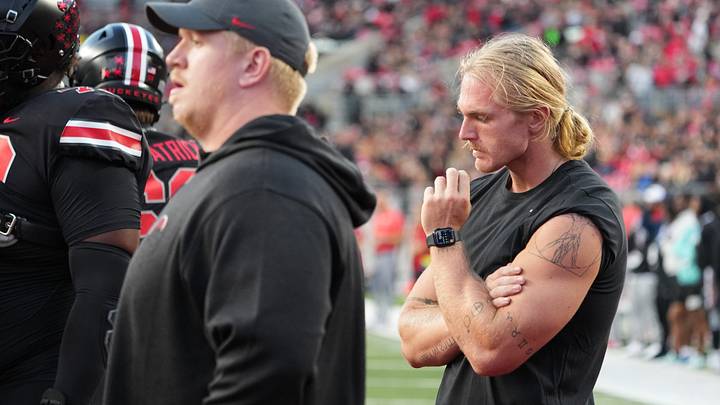
If you had looked at Harry Miller from the stands at Ohio Stadium in 2021, depression probably would not have been the first thing that came to mind.
He was an Ohio State football player.
That sentence alone tells you something about his ability. Thousands of high school football players dream about wearing the Scarlet and Gray. Very few ever do it.
Miller wasn't simply hanging around the program, either. He was a highly regarded recruit. He played offensive line for the Buckeyes. Away from football, he was an engineering student known for his intelligence.
From the outside, there were plenty of reasons to believe Harry Miller was doing just fine.
That's one of the problems with depression.
The happy, go-lucky people don’t put off any red flags.
We become accustomed to measuring people's lives by things we can see: Athleticism, bright smiles, appearances of confidence, or 100,000+ people cheering for them when they run onto a football field.
We think anybody in that position should feel happy. But depression doesn't care about what somebody should feel. Something is missing in the depressed person’s life. They are ashamed to admit it, hence the positive outward appearance. They often think others won’t understand. So, they stuff their feelings.
But Miller eventually did what is necessary when people are drowning. He walked into Ryan Day's office and revealed something far different from the life people could see from the stands. He was struggling with his mental health and thinking about suicide.
Day understood immediately that this was bigger than football. His own father died by suicide when Day was a child, an experience that helped make mental health deeply personal to the Ohio State coach. Day connected Miller with people who could help him. Miller later credited the support he received from Day, Ohio State's mental-health professionals, teammates and others with helping save his life.
Eventually, Miller decided he could no longer play football.
Think about the courage required for that decision!
Football players are taught to push through discomfort. Get up. Shake it off. Play the next snap.
Those can be wonderful lessons on a football field but are terrible advice when applied indiscriminately to mental health.
Sometimes strength isn't playing the next snap. It’s telling somebody, "I can't keep doing this."
Miller got vulnerable and it saved his life.
He remained connected to Ohio State, received treatment and eventually began telling other people what he had experienced. Instead of hiding the darkest period of his life, he used it to remind others that they don't have to struggle alone.
There is an important distinction here.
Everybody gets sad. Everybody has terrible days. Everybody gets knocked down occasionally.
Clinical depression is something more. It can bring persistent hopelessness, exhaustion, difficulty concentrating, withdrawal, loss of enjoyment and feelings of worthlessness. It can interfere with work, relationships, sleep and everyday functioning…even as the person experiencing it recognizes that it makes no sense.
Colors aren’t as bright. Jokes aren’t funny. Nothing seems to bring joy anymore.
Depression doesn't merely make someone feel bad. It tells you nothing is going to change. You’re worthless. You’ll never be successful. Nobody understands. You’re a burden.
It’s a sadistic narrator writing your daily story like a Stephen King novel.
But, it’s a LIAR. It’s telling you stories about yourself that are not true. The problem is, you’re the only one who doesn’t know it isn’t true.
And it’s so difficult to separate truth from fiction when you’ve been reading the same story for a while.
Harry Miller couldn't see every chapter that was still ahead of him when he walked into Ryan Day's office.
He only knew the chapter he was living in hurt.
So he told his coach.
And Day listened.
That's the lesson hidden inside this Ohio State football story that really isn't about football at all.
We spend Saturdays rooting for the Buckeyes, living or dying emotionally with the outcomes of games. Some of us, in our impulsive anger, pile on to players we target as the causes of losses…forgetting they are just young men trying to figure out life, not an extension of our egos.
And we never think we might be driving one of these guys to end his life because our pride was inconveniently dinged by the outcome of a game in which we weren’t involved.
If you’re struggling with depression, be a Harry Miller. Talk to someone. Spit that poison out of your system and allow another person to share different perspectives. Talking about it is the first step toward overcoming it.
It takes courage to ask for help.
O – H!